
2024 has been both a rough and a great year for gaming. We’ve seen the release of amazing titles like Black Myth: Wukong, Dragon’s Dogma II, the unexpected hit Helldivers 2 and Star Wars Outlaws, to name a few. That goes even without mentioning DLC for Games like Elden Ring or Diablo IV. But behind the scenes not everything has been so smooth.
At the end of 2023 the layoffs in the gaming industry were through the roof, with somewhere around 10,000 people loosing their jobs during the year thanks to companies like Microsoft, EA, Unity or Twitch having massive layoffs. And apparently that was an omen of what was to come.
During the first 6 months of 2024, the number of layoffs surpassed that of 2023. And most of it happened during the first 3 months. If you read the news every once in a while you probably heard of the big layoffs over at Microsoft, Sony and Unity. Sony laying off 900 people, Unity doubling that at 1,800 and Microsoft laying off around 2,900+ people – mind you that is on top of all the people that lost their job in 2023 when Microsoft was “re-scoping” the Bethesda and 343 studios.

The numbers for Microsoft’s total layoffs aren’t fully clear thanks to NDA’s and things of that nature, but I think you get the idea here. People are loosing their jobs at alarming rates at the hands of companies like Microsoft, who are doing multi-billion dollar deals to acquire studios like Activision Blizzard and then laying off 1,900 people without even a year going by since they bought the studio.
If you are interested in reading more in-depth about this subject in particular – since I don’t want to focus too much on this specifically – there are some amazing articles by Polygon and GameIndustry.biz, along with some great books by Jason Schreier – I’ll leave some links to that at the end – but you can check out this website to see the total breakdown of layoffs per studio along with info – if there’s any – on the layoffs: https://publish.obsidian.md/vg-layoffs/Archive/2024
TIME IS MONEY
Some people might look at this and think “Oh well if Microsoft had to lay off so many people, then the studio probably wasn’t making any money for them” to which I would answer maybe… But there’s a lot of evidence to knock that theory out. Also, no need to yell, please take a step back.
Not only is Activision Blizzard one of the biggest and most profitable studios out there. They own Call of Duty, a franchise that has generated approximately 30 billion USD – according to statista.com. But also, Call of Duty: Mobile has generated 30 million USD in 2024 alone. So I think it’s fair to say that money – at least in this case – is not the issue. So why are so many people getting layed off then?
Activision Blizzard wasn’t the only studio who got hit on the Microsoft side. Tango Gameworks, creators of the massive hit Hi-Fi Rush, who were owned –until very recently- by Microsoft almost got puffed into oblivion. Following the massive series of layoffs that Microsoft started early in 2024, Tango Gameworks were suddenly told that the already in production sequel to Hi-Fi Rush would be canceled, their jobs suspended and thanks for everything, be sure to grab a bagel on your way out.

At least that was the case until KRAFTON, a South Korean video game publisher swooped in and rescued Tango Gameworks from the clutches of Microsoft, promising to keep the studio alive and let them be semi-independent to work on the sequel and possible future projects. This last minute rescue sure was nice, but I also think it revealed a bit of the thought process behind Microsoft’s layoffs and as always, money is to blame. Mainly the amount of money – and time – that it’s costing big studios to create the latest AAA titles.
I think Shawn Layden – ex-CEO of Sony Interactive Entertainment America – said it pretty well on a recent talk he gave at Gamescom Asia:
“If we’re just going to rely on the blockbusters to get us through, I think that’s a death sentence.”
I take this comment as more of a simplified – and maybe a bit extreme – analysis of the current state of the gaming industry. The big AAA studios are trying to make every single game they publish a blockbuster, pouring thousands or millions of dollars and multiple years of hard work into projects that sometimes come off as just trying to jump on trends for the sake of it.
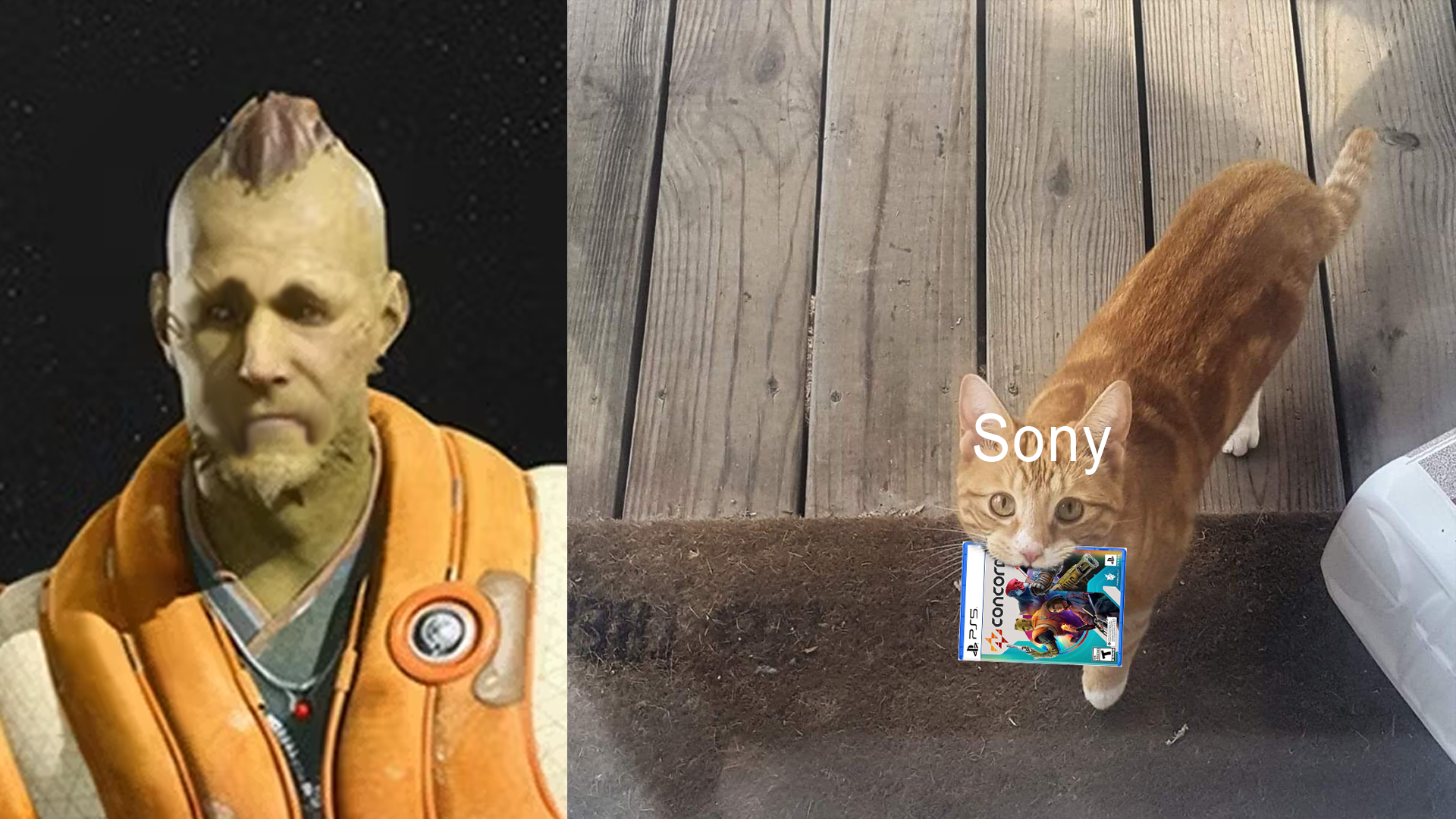
This usually comes from the big companies wanting to see their recently acquired studios making money as fast as possible, you know, get out the new game you’re working on so that it can blow up and turn into the new Fortnite. That way the share holders will decide if you will endlessly work on that same game for the next 10 years, if you’ll move on to the next game – which you’ll need to make in two years – or if they’ll just pull the plug and disband the studio, letting your weird Concord game die and exist only in passing conversation.
IN YE’ OLDEN AA DAYS
In the past we would get only a handful of big blockbuster games every year, with usually one from each big studio – Microsoft had their Halo’s, Sony maybe some Metal Gear Solid and Nintendo would bring a new title to one of their loved franchises, be it a Mario, Zelda or if we were lucky a Metroid game.
Back then it wouldn’t have been weird if there was only one or two really big games coming out a year, if Microsoft skipped a year without releasing a big game and only helped publish smaller indie or AA titles no one batted an eye. Nintendo could go silent for a year and only release a remaster of Mario vs Donkey Kong for the GameBoy along with a handful of fun little games and call it a year.
I actually think a good point of comparison now a days would be Nintendo, who seem to still hold true to the old days of game releases – or at least true to themselves. If we look at the last couple years Nintendo releases big blockbuster games every 2 years or so, sometimes a bit more, with some smaller extremely well made games sprinkled in between.
During the 7 years of the Nintendo Switch living among us, we’ve only seen a couple of Mario games, 2 big Zelda – maybe 3 if we count the recently released Echoes of Wisdom – and some big remasters here and there. Well, and the big party games like Mario Kart and Super Smash Ultimate, but even those games came out 7 years ago and are still going strong.
On the other hand, in the last 4 years we’ve seen Microsoft and Sony trying to one-up each other throwing remasters, “game of the year” remakes, anniversary collections and reviving any and all big franchises from the 2010s throwing blockbuster after blockbuster to see if anything sticks.
To further explore this idea, I direct your attention to the fact that there have been 2 Star Wars games released not 1 year apart from each other. Now, remember that they’re not some little prototype Star Wars games like back in the day where you had the Rogue Squadron and the pod racers doing their own thing. But looking at the most recent Star Wars games, I wouldn’t judge you if you couldn’t pick them apart.
Star Wars Jedi: Survivor (2023) is – as described by Wikipedia – a soulslike action-adventure game where you play as Cal Kestis, exploring the world of Star Wars from a third person perspective, jumping from planet to planet watching the story of Cal unfold in a galaxy-wide story. But allow me to also present to you Star Wars Outlaws (2024), the new open world action-adventure game where you get to explore the Star Wars universe jumping between planets as an outlaw, follow Kay Vess in her scoundrel adventure and see her path through the galaxy unfold in this ground breaking third person adventure.
You see what I’m getting at?

These two games – while both having their own issues – are still amazing pieces of game design and have teams made up of incredibly talented artists, designers, composer and so much more. Nevertheless they were both developed by different studios in collaboration with Disney, of course, to use the Star Wars license and create a new action-adventure game in Star Wars universe. So I don’t blame the developers and artists creating the games that some business execs wanted to do to profit from the very beloved franchise of space wizards, but… Did we really need not 1 but 2 new Star Wars games when the previous title came out in 2019?
I believe it’s even more clear to see the problem with this when you compare the amount of copies sold for each game. The first installment of these new Star Wars games, SW Jedi: Fallen Order (2019) sold almost 10 million copies in less than a year and over 20 million copies by June 2021, while it’s sequel – Jedi Survivor – has sold only about 1 million since it was released –roughly a year. With SW Outlaws also selling around 1 million copies.
I think it’s safe to say that most of the 20 million people that played and loved Fallen Order didn’t want – or need – a new Star Wars game.
I JUST WANT SOMETHING SIMPLE…
Big blockbuster games now a days seem to ask a lot out of their audience, it’s amazing to have so many cool games, but the problem is that we don’t have the time to play them. With games like Elden Ring that take around 60 hours to complete if you’re rushing through it like a mom on a tightly scheduled Disney trip, it’s hard to find the time to play – and finish – all the new games that come out. I’ve played 100+ hours of Elden Ring and barely got to the middle of the game, I’ve loved my time with it, but since it takes so much time and involvement in the gameplay to finish such a game, I don’t know when I’ll have the time to sit for hours – in multiple sessions – to finally finish the game. And yet my list of games to play keeps growing.
Last year I did a little indie summer gaming experiment that reminded me of the amazing feeling of being able to start and finish a game in a single weekend. Just being able to sit for maybe 3 or 4 hours through the weekend and play through a game was amazing. The feeling of finishing a game without having to seclude myself from the world for 10 hours, to then resurface and realize that I only got through the first area of the 15 areas in the game. Sometimes it’s nice to have a very polished and well executed game experience that isn’t trying to be a “forever game”. Games like Astro Bot and Hi-Fi Rush have proven that there IS a market for smaller AA titles that while not selling millions of copies like bigger titles, they also don’t need to sell them to make a profit.
This smaller – yet sometimes bolder – games are the key of innovation for the industry and I believe that’s what Shawn Layden was trying to get at. They are the types of games that make people own a Sega Genesis just to be able to play Jet Set Radio or inspire indie devs to make the “spiritual successors” of such games. They might seem like big risks, but people like that. We sure as hell prefer a game that feel bold and like a proof of concept at a $30 price, than a half cooked hero shooter set in a lifeless sci-fi universe with a $70 price tag slapped on it.
And I am sorry for the Concord team, I don’t mean to throw punches at them, it’s not their fault that the company overlords asked them to follow a dead game trend. You can clearly see the talent at the studio, if given the chance to do a smaller proof-of-concept passion project, I’m sure they could have created an amazing game that released sooner and could have turned into the amazing franchise they envisioned. But instead they were asked to create a blockbuster sequel to a movie that nobody even remembers.
If you’re interested on more about the gaming industry layoffs and stories about the game development world, check these out:
- Carpenter, Nicole. “2024 Has Already Had More Video Game Industry Layoffs than All of 2023 — and It’s Only June.” Polygon, 13 June 2024, www.polygon.com/24177290/video-game-industry-layoffs-studio-closures-record.
- Dealessandri, Marie. “Around 21% of European Games Professionals Have Been Laid off in the Past Year.” GamesIndustry.biz, 5 Nov. 2024, www.gamesindustry.biz/around-21-of-european-games-professionals-have-been-laid-off-in-the-past-year.
- Schreier, Jason. Blood, Sweat, and Pixels. HarperCollins, 5 Sept. 2017.
- Schreier, Jason. Play Nice. Grand Central Publishing, 8 Oct. 2024.



Leave a Reply